What’s In Your Vitamins? The Raw Truth About Quality!
Image created for Soulful Memories using AI
Are Your Vitamins Harming Your Health?
Vitamins and supplements are more important in today’s world. Given our current level of stress, soil depletion, and excessive food processing, this is not surprising. Many people are unaware of their nutritional deficiencies until they experience tiredness, mental fog, or become ill.
However, a large percentage of the world population is unaware that not all supplements are good for our health. Some companies make low quality items with cheap and harmful substances. Others contain synthetic vitamin elements that your body cannot absorb, or amounts that are minimal to benefit your health. Some medications and supplements may include unsafe fillers. Labels can often be misleading, promising people ultimate health benefits that the contents cannot provide.
Many countries throughout the world fail to regulate the supplement industry as they should. So, if we want to stay healthy, we must take responsibility and do our own research. This guide will aid you in choosing the right vitamin for your specific needs. You will realise why activated vitamins and high quality nutrients are essential for your health. I’ll also discuss which fillers are safe and what certificates to look for. My goal is to provide you the knowledge and confidence you need to choose the right vitamin for you.
My Personal Vitamin Journey:
My search for high quality vitamins began at a rough period in my health. The medication I was given caused a severe B12 deficiency, which led to several serious health problems. My side effects were similar to Alzheimer’s like symptoms, such as confusion and forgetfulness. I felt entirely drained of energy; my anxiety was crippling, and I fell into depression. I started taking cyanocobalamin, a synthetic kind of B12. Little did I know that my body couldn’t absorb this synthetic vitamin. This set me on a long, unpredictable health journey that includes autoimmune diseases.
Vitamins Supported by Research:
My health worsened until I discovered two YouTube channels: The Anti-Aging Channel and Dr. Eric Berg, DC. The advice from these sources revealed why I was not making progress with my new vitamin, and they prompted me to buy an activated form. This experience taught me the importance of picking the right supplement for my health, as the right vitamin contains the nutrients I need. I no longer have terrible anxiety or depression, and I am gradually recovering from short term memory loss.
3rd Party Testing and Report:
Ryker from the Anti-Aging Channel has made a video reviewing the most recent test results from ConsumerLab, an independent testing agency. These results raise serious concerns, particularly in light of the absence of government supervision of supplement manufacturers. Ryker’s video is titled 24 Multivitamins Lab Tested | Which Brands Can You Trust? It is a must see to learn how certain vitamins can damage your health and cause you to waste money on ineffective products.
The Anti-Aging Channel goes further into each supplement, where as ConsumerLab only considers accuracy, purity, and whether a supplement includes what the label states. Their tests do not assess the quality of the fillers or binders. Even if a product passes ConsumerLab testing, it may still include ingredients you want to avoid, such as titanium dioxide, magnesium stearate, or artificial colouring.
Introductory to Active and Synthetic Forms:
Active forms of vitamins are nutrients that are already in the precise state your cells need to work right away. Even though a lot of common foods and supplements have inactive forms, the active form bypasses the conversion process that usually happens in the liver, allowing your body to use them immediately.
Synthetic vitamins are nutrients that are created in a laboratory to resemble natural active forms. While their chemical makeup is nearly the same, these vitamins are made through artificial processes and often lack the extra enzymes and minerals that help your body absorb them quickly.
Examples of Active Vitamin Forms:
Active forms are often listed with names such as methylcobalamin (B12), methylfolate (B9), pyridoxal‑5‑phosphate (B6), or D3, to name a few. These forms are easier to absorb and more effective for those with low nutrient levels or MTHFR variations. Active forms can greatly impact your energy, mood, and general well being. They are typically found in higher quality supplements that put bioavailability ahead of profit margins.
Examples of Synthetic Vitamin Forms:
Inactive forms, including cyanocobalamin (B12) and folic acid (B9), require the body to convert them into active forms. This is challenging if one has a poor diet, digestive issues, or lacks enzymes. Many people do not realise that their supplements might be going through their system without providing the benefits they hope for.
Knowing the difference between active and inactive vitamins is a really big deal when you’re trying to pick ones that will actually help your health.
Reference Buying Guide
Vitamins Fillers: Safe vs Questionable:
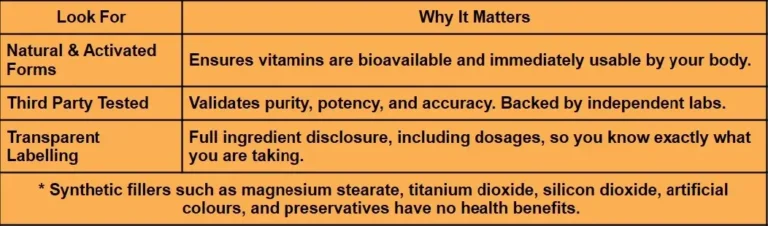
Supplements often contain fillers and binders for easier production, stability, and cost effectiveness. Some are harmless, while others offer no benefit and can cause side effects. Understanding the difference can help you choose supplements that are cleaner and more supportive for your health.
Safe and Well Tolerated Fillers:
Some fillers are commonly used and are considered low risk for most people. These include microcrystalline cellulose, rice flour, and silica. These ingredients help hold the capsule together or prevent clumping. They do not add nutritional value, although they are usually gentle on the digestive system.
Questionable and Unnecessary Fillers:
Other fillers provide no health benefit and can cause digestive upset or allergic reactions. Examples include magnesium stearate, titanium dioxide, and artificial flavours. These ingredients are often added to improve appearance and make manufacturing easier and cost effective. People with sensitive digestion or allergies should avoid these fillers.
How to Check for Fillers:
A great way to find out what’s in your supplement is to check the ingredient label. Trustworthy brands usually share their contents openly and often have simple, minimal formulas. If the list is long or has ingredients you don’t know, it could be a good idea to look for other options. Knowing what fillers are and their purpose can help you make smarter decisions for your health. Supplements with simpler ingredient lists tend to be easier on your body and might provide more reliable results.
How to Read a Supplement Label:
At first glance, a supplement label might seem overwhelming; however, it becomes simpler once you know the key details to look for. A clear label is one of the strongest signs that a brand is trustworthy. Understanding each part of the label helps you choose products that genuinely support your health.
Check the Form of Each Vitamins:
The form of a nutrient determines how well your body can use it. Active forms are usually easier to absorb and more effective for people with low nutrient levels or genetic variations.
Examples of active forms include:
Methylcobalamin. (B12)
Methylfolate. (B9)
Pyridoxal‑5‑phosphate. (B6)
Magnesium glycinate.
Vitamin D3. (cholecalciferol)
The body may need to convert inactive brands. If you have a poor diet, poor digestion, or genetic abnormalities like MTHFR, this can be challenging.
Examples of less effective forms include:
Cyanocobalamin. (B12)
Folic acid. (B9)
Magnesium oxide.
Vitamin D2. (ergocalciferol)
Choosing active forms can make a noticeable difference in how you feel. I’ll be discussing active and inactive brands of several vitamins and supplements in my upcoming post. Don’t forget to bookmark Soulful Memories for this in depth review!
Look at the dosage:
The amount of each nutrient matters. Too little may offer no benefit, while too much can be unsafe, especially with fat soluble vitamins such as A, D, E, and K. Under the supervision of a practitioner, it may be safe to exceed the recommended dosage level.
A good label will show:
The exact amount of each nutrient.
The percentage of the recommended daily intake.
Whether the dose is appropriate for daily use.
If the amounts seem unusually high or low, it may be worth exploring other options.
Read the Ingredient List Carefully:
The ingredient list reveals what else is in the supplement besides the nutrients.
Clean or gentle fillers:
Microcrystalline cellulose.
Rice flour.
Silica.
These are generally well tolerated.
Questionable or unnecessary fillers:
Magnesium stearate.
Titanium dioxide.
Artificial colours.
Artificial flavours.
These have no health benefits and may annoy people with allergies and other medical conditions. A shorter ingredient list is often a sign of a cleaner product.
Look for Transparency:
A trustworthy brand will clearly list on their labels the following:
The form of each nutrient.
The exact amount.
All additional ingredients.
The source of the nutrients. (if relevant)
On their website:
All of the above information.
Contact information for the manufacturer.
Labels that feel vague or confusing are often a sign to be cautious.
3rd Party Certifications
Third Party Testing – What to Look For:
Third party testing is one of the most reliable ways to confirm that a supplement contains what it claims. Independent testing helps verify purity, accuracy, and safety.
What third party testing checks:
Does the product contain the listed amounts?
Is it free from contaminants?
Does it break down properly in the digestive system?
Does it match the label?
What third party testing does not check:
The quality of fillers.
Whether the ingredients are natural or synthetic.
Whether the forms are active or inactive.
Whether the product is “clean” or gentle on digestion.
A supplement can pass testing and still contain fillers that some people prefer to avoid. This is why testing is helpful, although it is only one part of choosing a high quality product.
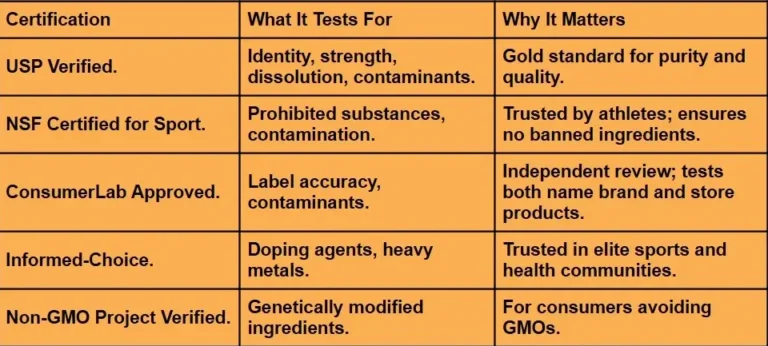
Common third party certifications include the following:
ConsumerLab.
USP (United States Pharmacopeia)
NSF International
Informed Choice.
Non-GMO Project.
These certifications indicate that the product has been independently reviewed.
Understanding how to read a supplement label gives you confidence and clarity. You can recognise active forms, avoid unnecessary fillers, and choose products that have been independently tested. This knowledge helps you make choices that genuinely support your health, rather than relying on marketing or assumptions.
Closing Words:
Choosing vitamins should not feel confusing or stressful. Many people simply want to support their health, although the supplement world can be crowded, inconsistent, and difficult to navigate. Understanding the basics of active forms, clean ingredients, and independent testing can make the process much easier.
Your body deserves nourishment that truly supports it. When you know what to look for, you can make choices that feel confident and informed rather than uncertain or overwhelmed. Small steps towards better quality can create meaningful changes in energy, clarity, and overall well being.
This guide is not about perfection. It is about awareness, self trust, and learning how to recognise products that genuinely care for your health. May this knowledge help you choose supplements that honour your body and support you on your path to feeling well.
About the Author
Hi, my name is Sherri. I have training in various holistic and non-holistic healing methods, including NLP, EFT, hypnotherapy, shamanic practices, and Reiki, among others. My knowledge extends to Ayurvedic medicine, astrology, and more. Although I no longer offer hands on healing, the insights I’ve gained continue to influence my writing and reflections.